
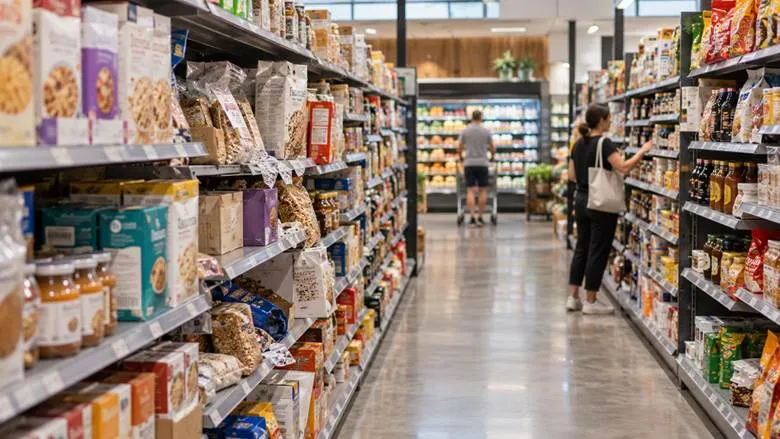
Opening or refurbishing a retail store involves significant financial decisions. Rent, inventory, staffing and marketing usually receive the most attention, while shelving is often treated as a straightforward fit-out expense.
However, choosing the wrong shelving can create costs that extend well beyond the initial purchase. Poorly designed displays can limit product visibility, increase restocking time, restrict usable floor space and require expensive replacements as the business grows.
For Australian retailers operating on tight margins, these inefficiencies can affect profitability over time.
Understanding the hidden costs of poor shelving decisions helps business owners make investments that support everyday operations rather than create additional expenses.
1. The True Cost of Choosing Shelving Based on Price Alone
A lower purchase price does not necessarily mean better value.
Retail shelving is used continuously. Staff replenish products, customers handle merchandise and displays are frequently adjusted to accommodate new stock. Shelving that cannot withstand these demands may require repairs, replacement components or complete replacement earlier than expected.
The real cost of shelving includes more than the original invoice. Retailers should also consider installation, maintenance, durability, component availability and the expense of future changes.
For businesses comparing commercial shelving options, suppliers such as Mills Shelving offer systems designed for different retail environments, product requirements and store configurations.
A practical purchasing decision considers how the shelving will perform over several years, not simply how much it costs to install today.
For example, an inexpensive system that becomes unstable or difficult to expand may eventually cost more than a durable, modular alternative. Replacing shelves can also require staff time, stock relocation and disruption to normal trading.
The objective should be to minimise the total cost of ownership while maintaining a reliable retail environment.
2. Lost Sales Opportunities From Poor Product Visibility
Shelving directly affects how easily customers can find, compare and access products.
Overcrowded displays can hide merchandise, while unsuitable shelf heights may place popular products outside comfortable reach. Poor aisle layouts can also make shopping unnecessarily difficult, particularly in smaller stores where every square metre matters.
These problems do not automatically result in lost sales, but they can create barriers between customer interest and purchase.
Consider a convenience store with deep shelving that pushes smaller products towards the back. Customers may struggle to see available options, while staff spend more time reorganising merchandise to maintain a presentable display.
Better shelving configurations allow retailers to position products according to their size, demand and intended presentation.
Product discovery increasingly begins before customers enter a physical store. As discussed in AI Search and TikTok Shop: How Social Discovery Is Changing Online Retail, digital channels are changing how consumers encounter and evaluate products. Once shoppers enter a store, physical merchandising becomes an important part of converting that interest into a purchase.
Retailers should therefore assess shelving based on product accessibility, visibility and the overall shopping experience rather than display capacity alone.
3. Higher Labour Costs From Inefficient Restocking
Restocking is a recurring operational expense, making shelving accessibility an important productivity consideration.
When shelves are difficult to reach, poorly spaced or unsuitable for the products being displayed, employees may spend unnecessary time rearranging merchandise, retrieving stock and correcting displays.
These small inefficiencies become more significant when repeated throughout the working week.
For example, a grocery retailer handling frequent deliveries needs shelving that allows staff to replenish fast-moving products efficiently. If products must be removed before new stock can be placed behind them, replenishment becomes more labour-intensive.
Similarly, inappropriate shelf heights can require excessive bending, reaching or additional handling.
Adjustable shelves, appropriate depths and logical product placement can reduce unnecessary movements and simplify daily replenishment.
Retailers should also consider how shelving integrates with their stockroom layout and delivery processes.
The financial benefit is not necessarily a reduction in employee numbers. More efficient restocking can allow existing staff to spend additional time assisting customers, maintaining presentation and completing other important tasks.
4. Expensive Replacements When Shelving Cannot Adapt
Retail stores rarely maintain the same product range indefinitely.
Seasonal demand, changing customer preferences, new suppliers and business expansion can all require adjustments to store layouts.
Shelving that works during the initial fit-out may become unsuitable when product categories change.
Fixed systems with limited adjustment options can force retailers to purchase additional fixtures or replace existing displays. In some cases, finding compatible replacement components becomes difficult, particularly when the original product range is discontinued.
Modular shelving helps address these challenges.
Adjustable shelf heights, interchangeable accessories and compatible extension bays allow retailers to modify displays without replacing every existing unit.
For instance, a retailer introducing larger packaged products may need deeper shelves or different vertical spacing. A compatible modular system can make this adjustment more straightforward.
Experience supplying commercial shelving to independent stores and major Australian retailers has informed Mills Shelving’s emphasis on long-term durability, compatible components and adaptable store configurations.
The practical lesson is that shelving should support more than a store’s current product range. It should accommodate reasonable changes in the business without requiring another substantial fit-out investment.
5. Safety Risks That Can Create Unexpected Business Costs
Poor shelving decisions can also introduce workplace safety risks.
Shelves that are overloaded, incorrectly installed or unsuitable for the merchandise they carry may become unstable. Falling products, obstructed aisles and damaged fixtures can create hazards for both employees and customers.
The consequences may include damaged stock, injuries, interrupted trading and potential liability.
SafeWork SA advises retailers to select shelving and racking appropriate for the goods being displayed, follow manufacturer installation instructions, observe safe working loads and maintain clear access through aisles and exits.
These considerations are particularly important in stores handling heavy, bulky or frequently replenished merchandise.
Retailers should assess the weight and dimensions of their products before selecting shelving. They should also check whether the proposed configuration can safely support the intended loads.
Proper installation and regular inspections are essential. Even commercial-grade fixtures can become unsafe when overloaded, damaged or modified incorrectly.
Safety should not be treated as an optional feature or an expense to minimise. Preventing avoidable incidents protects staff, customers, merchandise and business continuity.
6. How Australian Retailers Can Avoid Costly Shelving Mistakes
Avoiding unnecessary shelving expenses begins with assessing operational requirements before purchasing.
Rather than comparing products solely on price, retailers should evaluate several practical factors:
-
Product size and weight: Choose shelving with suitable dimensions, load capacities and accessories for the merchandise being displayed.
-
Floor space and customer movement: Plan shelf depths, aisle widths and fixture positions to maintain accessibility without wasting valuable retail space.
-
Durability: Consider whether the materials and construction can withstand regular restocking, customer interaction and daily cleaning.
-
Modularity: Look for systems that allow shelf heights, display arrangements and additional bays to be adjusted as requirements change.
-
Component availability: Confirm that compatible shelves, brackets and accessories can be obtained for future modifications.
-
Long-term ownership costs: Assess installation, maintenance, likely replacement needs and the operational disruption associated with future changes.
Retailers should also review their current layout before investing in new fixtures. Identifying frequently replenished products, congested aisles and underused display areas can reveal opportunities to improve efficiency.
According to Neil Webster, CEO of Mills Shelving, a common purchasing mistake is focusing on the initial shelving price instead of its long-term suitability. Retailers should consider how their product ranges and store layouts may change, particularly when selecting fixtures for a new business or refurbishment. Durable modular systems with compatible components can provide greater flexibility, helping businesses expand or reorganise their displays without replacing their entire shelving investment.
The right shelving choice depends on the individual store. A small convenience shop has different requirements from a supermarket, pharmacy or hardware retailer.
Assessing those requirements early can help prevent purchasing mistakes that become expensive to correct.
Conclusion: Better Shelving Decisions Protect Long-Term Retail Profitability
Shelving may represent only one component of a retail fit-out, but its influence on daily operations can be substantial.
Poor purchasing decisions can lead to unnecessary replacement costs, inefficient replenishment, restricted product visibility and avoidable safety risks. These expenses may not be obvious during installation, but they can accumulate throughout the life of a store.
Australian retailers should approach shelving as a long-term operational investment rather than a one-off purchase.
By prioritising durability, flexibility, safety and practical store requirements, businesses can reduce avoidable costs while creating an environment that supports employees and customers.
Ultimately, the most economical shelving is not always the cheapest to buy. It is the system that continues to serve the business effectively as its needs change.