
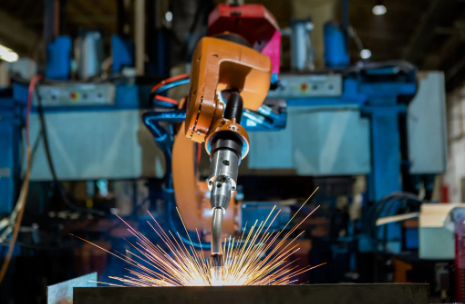
As manufacturers continue to adopt automation, robotic welding has become a cornerstone of modern fabrication. Robotic welding cells improve consistency, speed, and productivity—but they also introduce unique air quality challenges. One of the most critical considerations in automated welding environments is robotic welding fume extraction, which plays a key role in protecting workers, equipment, and overall facility performance.
Why Robotic Welding Creates Unique Air Quality Challenges
Welding fumes contain a complex mixture of metal oxides, gases, and fine particulate matter generated during the welding process. In robotic welding cells, these fumes are often produced continuously, at higher duty cycles, and in enclosed or semi-enclosed spaces. Unlike manual welding, where operators may reposition themselves or adjust capture hoods, robotic systems operate autonomously, making fume control system design even more critical.
Without effective robotic welding fume extraction, contaminants can spread beyond the welding cell, impacting nearby workstations, sensitive machinery, and overall indoor air quality.
The Importance of Source Capture in Robotic Welding
Best practice for robotic welding fume extraction focuses on capturing fumes as close to the arc as possible. Source capture prevents fumes from dispersing into the surrounding environment and reduces the overall airflow required for effective filtration.
Common source-capture methods include:
- Fume extraction arms positioned at strategic points within the robotic cell
- Integrated extraction hoods or enclosures
- Torch-mounted or near-torch extraction solutions (when applicable)
Properly designed source capture systems help maintain consistent airflow even as robots move through complex welding paths.
Designing Effective Robotic Welding Fume Extraction Systems
An effective robotic welding fume extraction system must be tailored to the specific application. Factors such as weld type, materials, cell layout, and production volume all influence system design.
Key design considerations include:
- Airflow requirements based on fume generation rates
- Enclosure design to contain fumes while allowing robotic movement
- Filter selection, such as cartridge or HEPA filtration, depending on particulate size and compliance needs
- System integration with robotic controls and safety interlocks
A well-designed system not only improves air quality but also minimizes interference with robot operation and maintenance access.
Health, Safety, and Compliance Benefits
Welding fumes may contain hazardous substances such as manganese, hexavalent chromium, and nickel compounds. Over time, exposure can contribute to respiratory issues and other health concerns. Robotic welding fume extraction helps facilities align with OSHA exposure limits and supports broader environmental and workplace safety initiatives.
Additionally, cleaner air reduces the buildup of contaminants on robotic components, sensors, and electrical systems—helping extend equipment life and reduce unplanned downtime.
Maintenance and Long-Term Performance
Even the most advanced robotic welding fume extraction systems require regular maintenance to perform effectively. Filter condition, airflow balance, and duct integrity should be monitored as part of a preventative maintenance program. Automated filter monitoring and centralized systems can help simplify maintenance in facilities with multiple robotic welding cells.
Looking Ahead: Smarter Air Filtration for Automated Manufacturing
As automation continues to evolve, robotic welding fume extraction systems are becoming more intelligent, energy-efficient, and integrated with facility-wide air management strategies. Advances in filtration media, airflow controls, and system monitoring are helping manufacturers maintain cleaner, safer production environments without sacrificing efficiency.
Effective robotic welding fume extraction is no longer just an add-on—it’s a critical component of modern automated welding operations. By prioritizing proper system design and maintenance, manufacturers can protect workers, improve productivity, and support long-term operational success.