
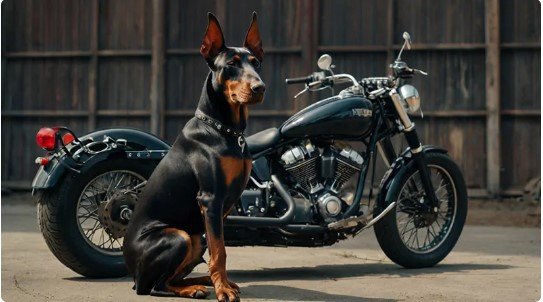
Choosing a punk rock name for a dog requires balancing two distinct frameworks simultaneously: the phonetic criteria that determine how well a dog recognizes and responds to its name, and the cultural criteria that determine how accurately the name represents the punk rock tradition it draws from. A name that fails either framework creates long-term friction — either in training or in the owner’s relationship with the name itself.
What Makes a Name Functionally Suitable for a Dog?
A dog-suitable name has one or two syllables, contains at least one hard consonant, and does not produce a sound pattern that overlaps with common obedience commands. These are not stylistic preferences — they are conclusions drawn from canine auditory physiology and behavioral training research.
Dogs’ hearing is approximately four times more sensitive than human hearing, according to Psychology Today, and they process names as sound patterns rather than semantic labels. Research from nameformydog.com documents that dogs require 30 to 50 positive name-associations for solid recognition to form, and that the neural response to a learned name is seven times stronger than to acoustically similar words — which is precisely why phonetic uniqueness matters. A name that sounds like a command word (Mo / No, Kit / Sit, Jett / get) creates disambiguation problems that slow the recognition window by weeks.
The Seeing Eye organization, which trains guide dogs professionally, specifies in its naming guidelines that names must be one or two syllables, and that three-syllable names are selected only in exceptional cases. Hard consonants — b, k, d, t — and open vowels at the end of the name are identified by the Animal Behavior College as the phonetic combination that produces the fastest and most consistent canine response. The Royal Kennel Club independently confirms the same two-syllable rule as a baseline for effective name training.
The Conflict Zone: Command Overlap in Punk Names
Punk rock vocabulary generates several names that sit dangerously close to command words:
- Spitz (after Mark Spitz, borrowed into punk lexicon) — overlaps with “sits”
- Nico (after Nico of The Velvet Underground) — overlaps with “no” at speed
- Kit (from punk slang) — identical to “sit” when spoken quickly
- Neil (Neil Young, Neil Peart) — overlaps with “heel”
- Mo (from punk band naming conventions) — direct overlap with “no”
None of these names are unusable, but each requires the owner to train with deliberate disambiguation — a longer process than names with no command overlap.
How Do You Source a Punk Rock Name with Cultural Accuracy?
A punk rock name sourced with cultural accuracy comes from one of five traceable categories: musician names, band names, album or song titles, punk-coded vocabulary, and aesthetic or ideological terms. Mixing categories without knowing the source creates names that look punk but carry no verifiable cultural content — a problem for owners who want the name to mean something specific.
Musician Names from Punk’s First Wave (1974-1979)
The first wave of punk rock emerged in New York around 1974, centered on CBGB (315 Bowery, Manhattan) with bands like the Ramones, Television, Blondie, and Talking Heads, and detonated in the United Kingdom in 1976 with the Sex Pistols, The Clash, The Damned, and the Buzzcocks. The musicians from this period produced the densest concentration of phonetically viable dog names in punk history.
From the Ramones — the band credited with founding punk rock as a genre when they began performing in Queens, New York in 1974 — the four original members adopted the shared stage surname Ramone. Joey (Jeffrey Ross Hyman), Johnny (John William Cummings), Dee Dee (Douglas Glenn Colvin), and Tommy (Thomas Erdelyi) provide names across a range of phonetic profiles. Joey and Tommy are two-syllable with open vowel endings, meaning they score highest on canine recognition criteria. Dee Dee is a reduplication pattern (two identical syllables) that dogs process easily due to the rhythmic repetition.
From the Sex Pistols: Sid (John Simon Ritchie, known as Sid Vicious) is a single-syllable, hard-consonant name with zero command overlap. Johnny (John Joseph Lydon, known as Johnny Rotten) is two syllables with stress on the first. Steve (Steve Jones, guitarist) is single-syllable. Glen (Glen Matlock, original bassist) is single-syllable with a hard consonant. All four satisfy canine phonetic criteria.
From The Clash: Joe (Joe Strummer, born John Graham Mellor), Mick (Mick Jones), Paul (Paul Simonon), and Topper (Terry Chimes, drummer, nicknamed Topper) cover a range from generic (Joe, Paul) to culturally specific (Topper). The name Strummer, used as a standalone, is a two-syllable name that non-Clash fans read as a music-related common noun — an unusual double layer of meaning.
Musician Names from Hardcore and Post-Punk (1980-1990)
The hardcore punk movement that followed the first wave — anchored by American bands including Black Flag, Minor Threat, Dead Kennedys, Bad Brains, and the Misfits — produced a second generation of punk musician names with different phonetic profiles.
Henry (Rollins, Black Flag vocalist) is two syllables, stress on the first, no command overlap. Ian (MacKaye, Minor Threat and later Fugazi) is two syllables with a soft opening — phonetically adequate but less sharp than hard-consonant names. Jello (Biafra, Dead Kennedys vocalist, born Eric Reed Boucher) is a two-syllable name with an open ending that dogs process easily, though its everyday association with gelatin dessert creates social friction in some contexts. Glenn (Danzig, Misfits vocalist) is single-syllable with a hard consonant and strong vowel — phonetically near-ideal.
From the riot grrrl movement of the early 1990s — centered on Bikini Kill, Sleater-Kinney, and Hole — female punk names with strong phonetic profiles include Kathleen (Hanna of Bikini Kill), Corin (Tucker of Sleater-Kinney), and Carrie (Brownstein of Sleater-Kinney). Courtney (Love of Hole) is a three-syllable name that exceeds the recommended ceiling for canine recognition efficiency.
Band Names and Subgenre Labels Used as Dog Names
Band names used directly as dog names follow a different phonetic logic than musician names — they were constructed for cultural impact, not human recognition, which means some require phonetic adaptation.
Ramone works as a standalone dog name (two syllables, stress on first, hard consonant). Clash is single-syllable with a sharp ending. Misfits is two syllables but ends in a soft sibilant — trainable but less sharp than hard-ending names. Fugazi (two syllables, Italian military slang for “fake” or “lost,” repurposed as a band name by Ian MacKaye) has a distinctive sound profile with no command overlap and a specific cultural signal within hardcore punk.
Subgenre labels themselves can serve as dog names. Hardcore is three syllables — above the optimal ceiling — but its shortened form Core is single-syllable. Oi (the street punk subgenre associated with British working-class punk bands like Sham 69 and the Cockney Rejects) is a single-syllable name that is phonetically functional but requires constant explanation in public settings.
What Criteria Should Govern the Final Selection?
Choosing a punk rock name for a dog involves running each candidate through four sequential filters. A name that fails any single filter requires either modification or replacement.
Filter 1: Phonetic Performance Test
Run the name against the following checklist derived from guidance by the Seeing Eye, the Royal Kennel Club, and the Animal Behavior College:
- Syllable count: one or two syllables (maximum three in exceptional cases)
- Hard consonant: at least one of b, k, d, t, g present
- Vowel ending: names ending in a, e, i, o, ee score higher on canine recognition
- Command overlap: say the name quickly ten times in a row and listen for acoustic similarity to no, sit, stay, come, down, heel, off, leave
Names passing this test: Sid, Mick, Roxy (after punk aesthetic / the song “Roxanne” by The Police), Dee, Joe, Clash, Ramone, Danzig, Glenn, Poly (Poly Styrene), Patti (Patti Smith), Ian, Ozzy, Lux (Lux Interior, The Cramps).
Names requiring adaptation: Siouxsie (phonetic spelling “Soo-zee” resolves to two clear syllables once standardized), Jello (three letters but two syllables — adequate), Biafra (three syllables — use as registered name only with a shortened call name).
Filter 2: Cultural Accuracy Test
The owner should be able to answer three questions about the name’s source:
- Who or what does this name reference?
- What did that person or band contribute to punk rock specifically?
- What year and location does the reference belong to?
A dog named Sid whose owner knows nothing about Sid Vicious’s role in the Sex Pistols (1975-1978, London), his death in New York in 1979 at age 21, or the circumstances of Nancy Spungen’s death carries the name as a purely aesthetic label. This is not wrong, but it places the name in a different category than one chosen with full biographical knowledge. The cultural accuracy test is not a gatekeeping mechanism — it is a clarity tool that prevents naming regret when the owner learns the full story of the name they chose years into the dog’s life.
Filter 3: Lifespan Compatibility Test
Dogs live 10 to 15 years on average, with small breeds frequently reaching 16 to 18 years. A name chosen at 8 weeks will be used daily, written on veterinary records, spoken in dog parks, and registered in kennel club documents for that entire period. Punk rock names drawn from the first wave (1974-1979) have already demonstrated 45 to 50 years of cultural staying power — they do not carry obsolescence risk. Names drawn from more recent pop-punk or post-punk revival movements carry shorter cultural track records.
The registered name and the call name are legally separable in most kennel club systems. A dog registered as “Anarchy in the U.K.” can be called Anarchy, Archy, or simply A in daily training. This separation allows the owner to preserve the full cultural reference for documentation while using a phonetically optimized version in practice — the convention professional breeders use routinely.
Filter 4: Breed and Temperament Coherence Test
Punk rock names create a visual and behavioral expectation about the dog carrying them. This is not a phonetic issue — it is a social and psychological one. The name interacts with the dog’s appearance and behavior in ways that produce either coherence or irony, both of which are valid, but both of which should be deliberate.
High-energy, physically intense breeds — Belgian Malinois, Staffordshire Bull Terriers, Dobermanns, Rottweilers — carry names like Clash, Riot, Sid, or Danzig with visual coherence. The name matches what an observer sees.
Small breeds — Jack Russell Terriers, Chihuahuas, Miniature Pinschers, French Bulldogs — carrying the same names perform an inversion that is itself consistent with punk’s core aesthetic logic: subverting expectations through deliberate contrast. A 3-kilogram Chihuahua named Anarchy is operating within punk’s tradition of using symbols to challenge assumptions about power and scale.
Working and service dogs — guide dogs, police dogs, search-and-rescue dogs — require names that can be communicated accurately across agencies, handlers, and emergency situations. Sid, Mick, Joe, and Ian are standard enough to function without spelling clarification. Siouxsie, Jello, and Exene (Exene Cervenka of the Los Angeles punk band X) require spelling guidance in every formal documentation context, which creates low-level operational friction over a working dog’s 8- to 10-year career.
How Does Name Training Work with Punk Rock Names?
Name training for a punk rock name follows the same classical conditioning protocol as any other name. The name’s cultural content is irrelevant to the dog — what matters is the consistency and positivity of the association built during the first two to three weeks of use.
The foundational sequence: say the name once in a clear, neutral tone; the moment the dog looks toward the sound, immediately deliver a high-value reward (food treat, brief play, verbal praise). Repeat this 30 to 50 times across different environments and times of day. After consistent exposure in those conditions, the dog’s neural response to its name becomes reliably stronger than its response to acoustically similar words — which is the recognition threshold that makes training effective.
Two errors slow this process specifically with punk rock names. First, using the name in negative contexts (punishment, frustration) breaks the positive association and rebuilds a stress-linked response that competes with the trained recall signal. Second, using multiple versions of the name interchangeably before the primary name is fully learned — Sid and Sidney used interchangeably, or Ramone and Rami — creates competing sound patterns. The Animal Behavior College specifically recommends establishing the primary name before introducing consistent nicknames.
A punk rock name with three syllables — Jello, Biafra, Anarchy, Siouxsie — should be shortened to a one- or two-syllable call name during the initial training period. Once recognition of the call name is established (typically 2 to 3 weeks of consistent positive reinforcement), the full name can be introduced as a secondary pattern. Most dogs with solid primary-name recognition extend recognition to a related longer form within one additional week of consistent use.
Male vs. Female Punk Rock Dog Names — Selection by Source
The gender distribution of punk rock’s historical figures is historically skewed toward male performers in the first wave, which gives male punk dog names a larger sourcing pool. Female punk figures from the first and second wave provide a smaller but phonetically distinctive set of options.
Male Punk Rock Dog Names by Era
| Name | Source | Era | Syllables | Hard Consonant |
| Sid | Sid Vicious, Sex Pistols | 1976-1978 | 1 | Yes (d) |
| Joey | Joey Ramone, Ramones | 1974-1996 | 2 | Yes (j) |
| Mick | Mick Jones, The Clash | 1976-1983 | 1 | Yes (k) |
| Glenn | Glenn Danzig, Misfits | 1977-1983 | 1 | Yes (g) |
| Ian | Ian MacKaye, Minor Threat | 1980-1983 | 2 | No |
| Jello | Jello Biafra, Dead Kennedys | 1978-1986 | 2 | Yes (j) |
| Lux | Lux Interior, The Cramps | 1976-2009 | 1 | Yes (x) |
| Lars | Lars Frederiksen, Rancid | 1991-present | 1 | Yes (r/s) |
| Joe | Joe Strummer, The Clash | 1976-1983 | 1 | Yes (j) |
Female Punk Rock Dog Names by Era
| Name | Source | Era | Syllables | Hard Consonant |
| Patti | Patti Smith | 1973-present | 2 | Yes (t) |
| Poly | Poly Styrene, X-Ray Spex | 1976-1979 | 2 | Yes (p) |
| Exene | Exene Cervenka, X | 1977-present | 3 | Yes (x/k) |
| Corin | Corin Tucker, Sleater-Kinney | 1994-present | 2 | Yes (k) |
| Carrie | Carrie Brownstein, Sleater-Kinney | 1994-present | 2 | Yes (k) |
| Kathleen | Kathleen Hanna, Bikini Kill | 1990-present | 3 | Yes (k) |
| Siouxsie | Siouxsie Sioux, Siouxsie and the Banshees | 1976-1996 | 2 | Yes (s) |
Punk Rock Name vs. Pop Punk Name — A Functional Difference
Punk rock and pop punk are distinct genres with different historical origins, different musician pools, and different phonetic name characteristics. Selecting between them affects which names are available and what cultural signal the name sends.
Punk rock (1974-1985, and its hardcore continuation through the 1980s) draws on New York, London, Los Angeles, and Washington D.C. scenes. Its names tend toward short, aggressive, or deadpan constructions: Sid, Clash, Oi, Rotten, Void.
Pop punk — the commercially successful genre that emerged in the early 1990s with bands like Green Day, The Offspring, Blink-182, and NOFX — produces names with more mainstream phonetic profiles. Billie (Joe Armstrong of Green Day) is two syllables with an open ending. Dexter (Holland of The Offspring) is two syllables with a hard consonant. Mark (Hoppus of Blink-182) is single-syllable.
The distinction matters for owners who want a name with a specific cultural signal. A dog named Sid sends a first-wave punk signal. A dog named Billie sends a pop-punk signal. Both fall under the broader “punk rock name” category, but they reference different decades, different sounds, and different aesthetics. An owner who knows the difference will choose more deliberately. An owner who does not will likely choose based on phonetics alone — which, from a training standpoint, is a fully valid approach.
Practical Decision Framework: Four Questions Before Naming
Running through these four questions produces a selection decision with documented reasoning behind it:
- Does the name have one or two syllables, contain a hard consonant, and avoid overlap with the commands you plan to use in training?
- Do you know the specific person, band, or cultural concept the name references, and are you comfortable with that reference appearing on veterinary records, kennel club registration, and ID tags for 10 to 15 years?
- Does the name carry cultural durability — has its source remained recognizable for at least 20 years since peak activity?
- Does the name suit the dog’s physical size, breed energy level, and the social contexts (professional, public, multi-handler) in which the name will be used daily?
A name passing all four questions is a functionally sound punk rock dog name. A name failing one question is improvable with modification. The process takes longer than browsing a list and picking what sounds interesting — but it produces a name that remains appropriate, recognizable, and meaningful across the full span of the dog’s life.